The Most Expensive Words in Money
Why the language around money shapes your financial decisions more than most people realise.

Most Financial Decisions Are Not Purely Logical
We like to think our financial decisions are rational.
Carefully considered.
Data driven.
Objective.
But in reality, many financial decisions are emotional decisions dressed up as logical ones.
And often, those emotions begin with a single word.
The language we hear around money shapes how we think about investing, risk, retirement, wealth, and success. Over time, those words become beliefs.
And eventually, those beliefs become behaviours.
The problem is that much of the language used in finance was never designed to help people make calm, long-term decisions.
It was designed to grab attention.
To create urgency.
Or to sell something.
And when certain words are repeated often enough, they start influencing how people behave with money, whether they realise it or not.
Financial Language Is Rarely Neutral
Think about the way financial markets are discussed in the media.
Every headline competes for attention.
Every market movement becomes dramatic.
Every decline feels urgent.
Every setback becomes a crisis.
Because fear attracts engagement.
But good financial decisions are rarely made in panic.
The same pattern appears throughout the financial world.
Some products are sold through excitement. Others are sold through fear. Over time, many people unknowingly build an internal narrative about money based on headlines, commentary, and outdated financial thinking.
The issue is that while the language may be powerful, it is not always helpful.
And yet it still shapes behaviour.
“The Market Crashed”
Few phrases trigger emotion faster than this one.
A market decline is suddenly framed as destruction. Something dangerous. Something people need to escape from immediately.
But temporary declines are a normal part of long-term investing.
Markets move.
They fluctuate.
They reset.
Volatility is uncomfortable, but it is not unusual.
The problem is that when investors hear the word “crash,” they often feel pressure to act emotionally rather than strategically.
And over time, emotional reactions to short-term market movements have caused far more damage than the declines themselves.
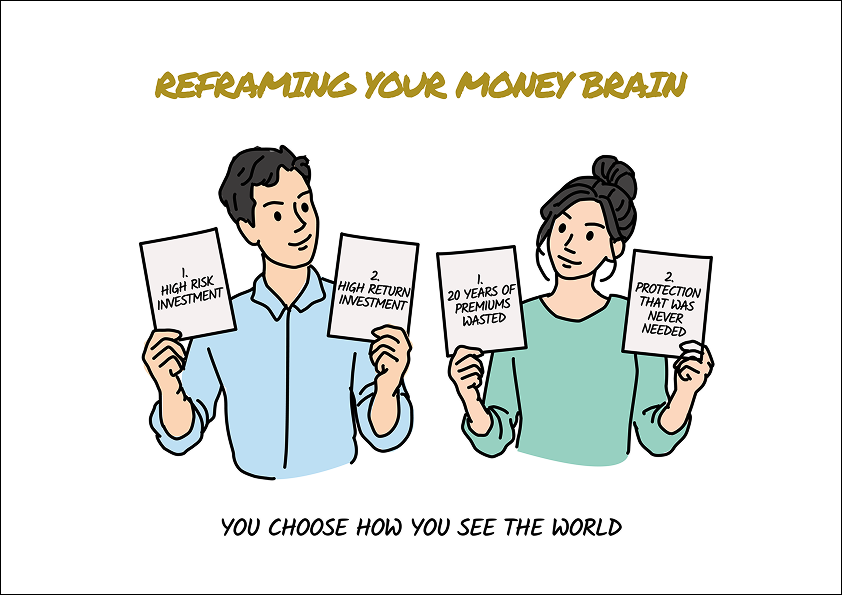
“That Investment Is High Risk”
This is one of the most misunderstood phrases in finance.
Too often, risk is defined by short-term movement rather than long-term outcomes.
A diversified long-term investment portfolio will fluctuate. That is part of investing.
But historically, productive assets that experience short-term volatility have also been among the most effective tools for building long-term wealth and outpacing inflation.
Short-term discomfort is not always the same thing as long-term risk.
In many cases, the greater risk is failing to grow at all.
“Cash Is Safe”
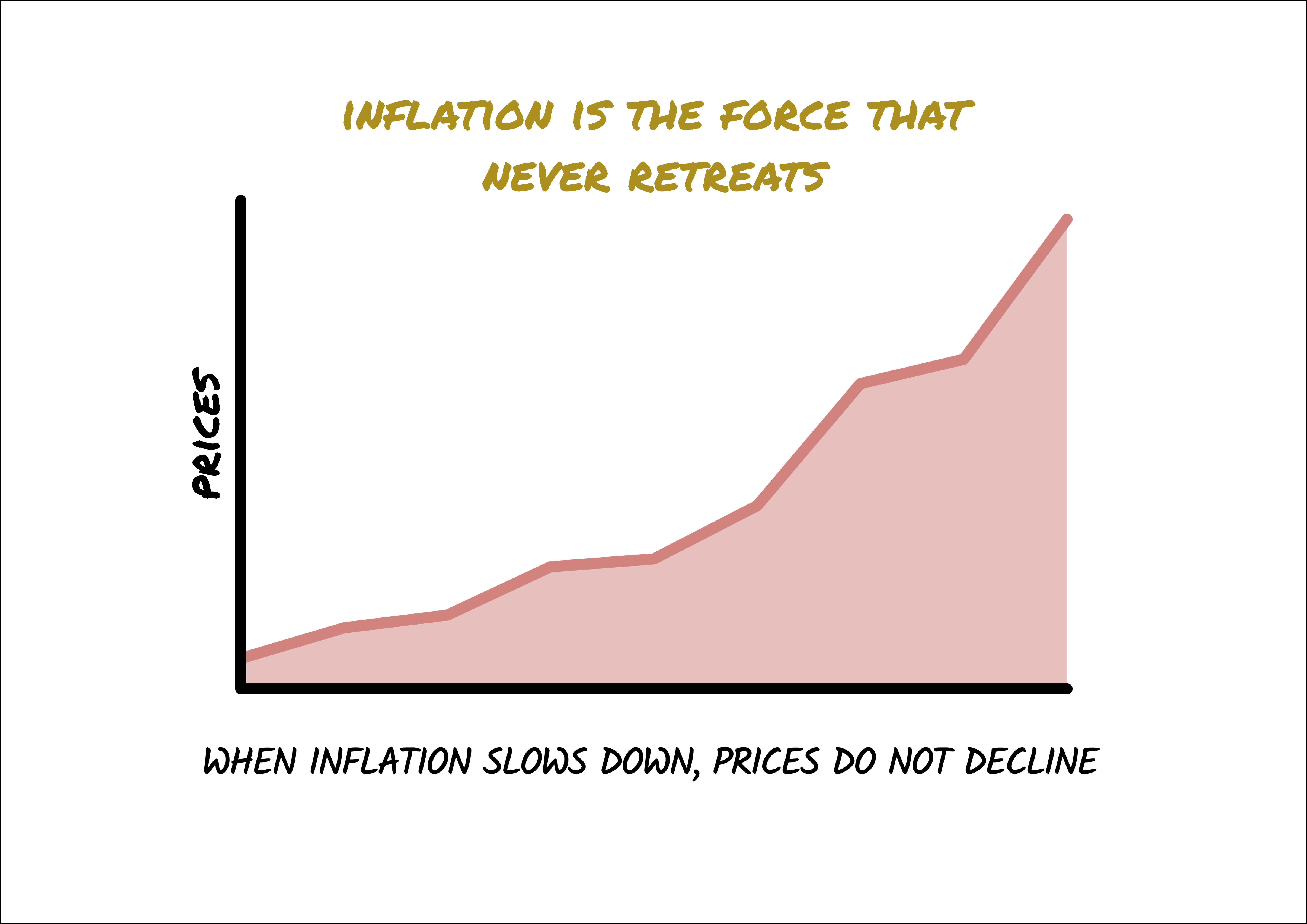
Cash feels safe because the number does not move.
But purchasing power does.
Quietly.
Consistently.
Over time.
Inflation slowly reduces what money can buy.
Which means holding too much cash for too long creates its own form of risk. A slower and less visible one, but a very real one nonetheless.
The danger is not volatility.
It is stagnation.
“I’ve Paid Insurance for Years and Never Claimed”
People often say this as though the money was wasted.
But insurance was never designed to create a financial return.
It was designed to create protection.
Not needing to claim means life continued without the financial hardship the policy was there to protect against.
That is not failure.
That is the outcome you hoped for.
Good insurance works quietly in the background, often unnoticed until it is needed most.
“The Stock Market”
Even the phrase itself can sound intimidating.
Cold.
Unpredictable.
Almost casino-like.
But investing is not about gambling on random numbers moving across a screen.
When you invest, you are buying ownership in real businesses.
Companies employing people.
Solving problems.
Creating products.
Generating profits.
Long-term investing is not speculation.
It is participation in the growth of productive businesses and the broader economy over time.
“Drawing Down Your Retirement Savings”
Even retirement language can unintentionally create fear.
The phrase itself sounds like depletion. Like something is running out.
But retirement is not about watching your money disappear.
After decades of working, saving, and investing, retirement is the stage where your money begins supporting the life you spent years building.
You are not draining your future.
You are finally allowing your financial discipline to support you in return.
Why The Words Matter
Most financial mistakes are not caused by a lack of intelligence.
They are caused by fear.
Panic.
Short-term thinking.
And often, those emotions are triggered by language long before numbers enter the conversation.
Once you begin paying attention to the words used in headlines, financial commentary, and even your own self-talk, you start to notice how much influence they carry.
That awareness alone can improve decision making.
Because clearer thinking leads to better behaviour.
And better behaviour is what drives long-term financial outcomes.
Good Advice Helps Filter the Noise
One of the most valuable parts of financial advice is not just strategy.
It is perspective.
Helping people understand what is actually happening instead of reacting to the loudest headline in the room.
Because once emotional language is removed, financial decisions often become much clearer.
And clarity creates confidence.
Not confidence built on hype or certainty.
Confidence built on understanding.
Important Information
The value of investments and any income from them can fall as well as rise, and you may not get back the full amount invested. Past performance should be used as a guide only and is not a guarantee of future performance.
Different investors will view these trade-offs differently depending on their objectives, time horizon, and attitude to risk. If you would like to discuss how this relates to your own circumstances, please speak with us.
*Main image from HUM